Upgrading wastewater reuse systems
10 Jan, 2026Upgrading wastewater reuse systems is not only a technical improvement but a long-term economic and...
Key Considerations for Efficient, Safe, and Sustainable Implementation
As industries face rising freshwater costs, stricter environmental regulations, and increasing ESG requirements, the construction of a wastewater reuse system has become a practical and strategic investment. However, beyond system design, proper construction and installation play a decisive role in ensuring stable operation, consistent water quality, and long-term economic performance.

This article outlines the construction process and critical considerations for wastewater reuse systems, based on practical implementation experience by Việt Water JSC across industrial plants and industrial parks.
The construction of a wastewater reuse system includes:
Installation of advanced treatment units (UF, RO, disinfection)
Integration with the existing wastewater treatment plant
Mechanical, electrical, and control system installation
Commissioning, testing, and operator training
A well-executed construction phase ensures that the system operates exactly as designed, minimizing risks and unexpected operating costs.
Before construction begins, a thorough assessment is essential:
Verification of existing wastewater treatment performance
Confirmation of influent water quality stability
Evaluation of available space and infrastructure
Review of environmental permits and internal standards
This step helps avoid construction changes, delays, and cost overruns during installation.
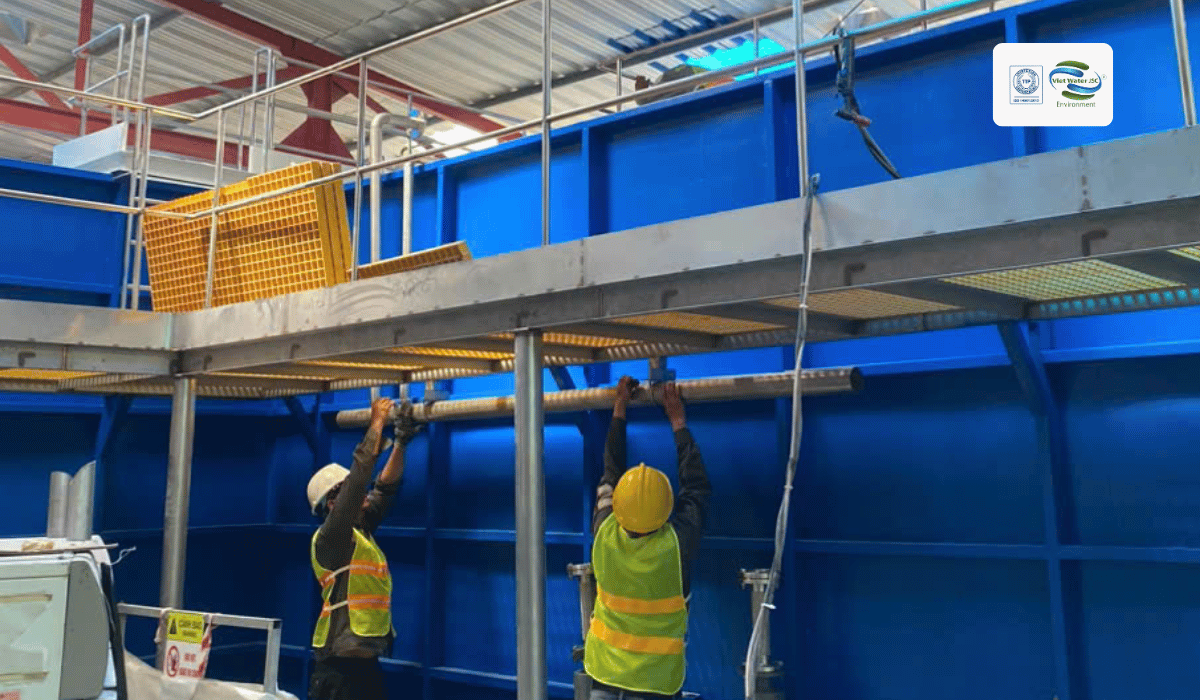
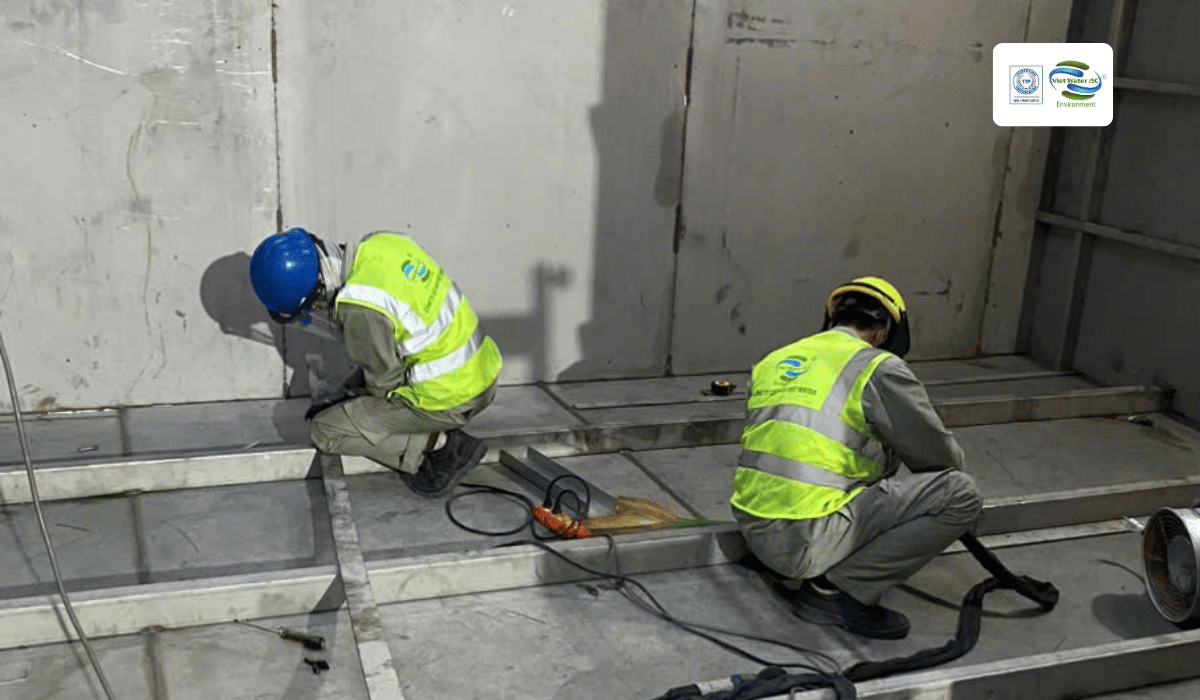
Construction of equipment foundations and skid bases
Installation of tanks, platforms, and access walkways
Ensuring structural strength and vibration resistance
Proper civil preparation ensures safe installation and long-term equipment stability.
This stage includes:
Installation of UF and RO membrane skids
Pumps, pressure vessels, and piping systems
Valves, instruments, and chemical dosing systems
All materials must be compatible with treated wastewater and operating pressure conditions to ensure durability and safety.
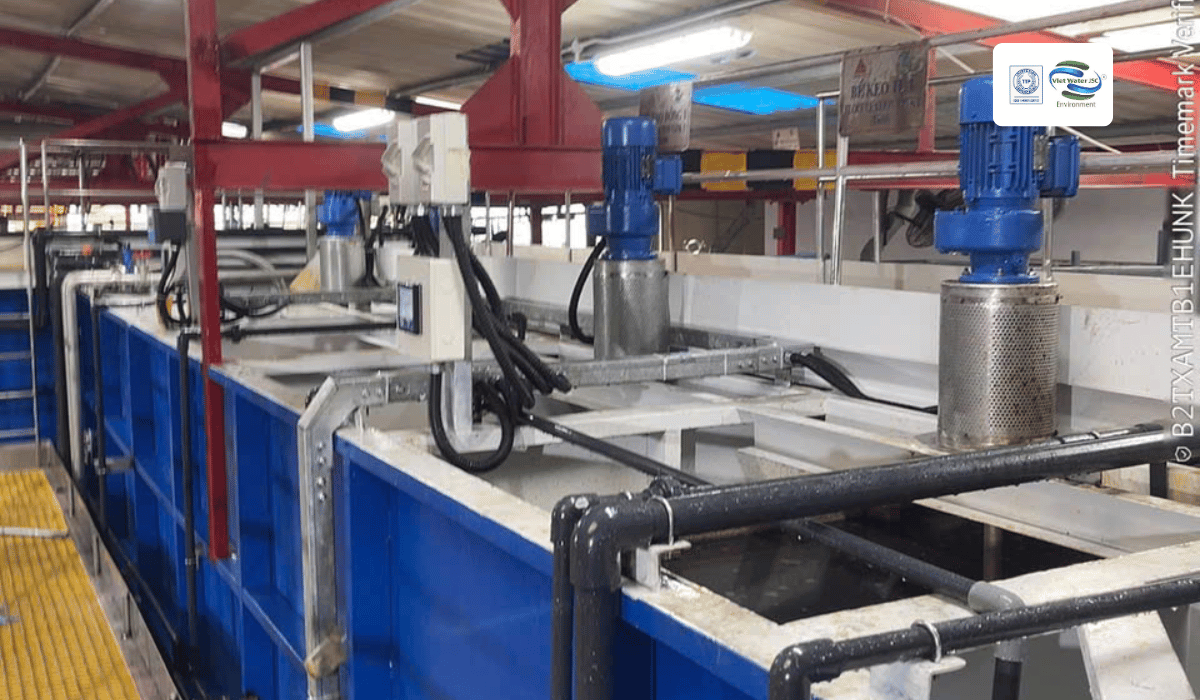
Power supply and motor control panels
PLC/SCADA system installation
Instrumentation wiring and signal integration
Safety interlocks and alarm systems
Automation is critical for wastewater reuse systems, especially for continuous quality monitoring and operational reliability.
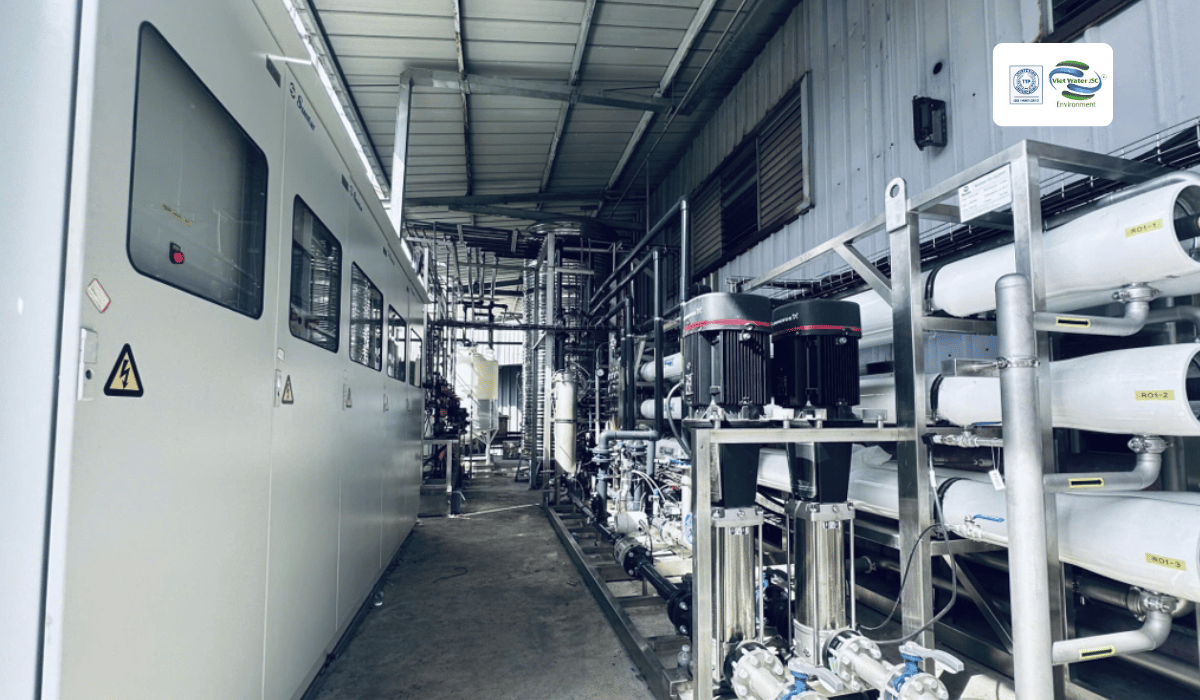
Wastewater reuse systems are typically installed downstream of existing biological treatment. Key considerations include:
Hydraulic balance and flow control
Protection of reuse systems from shock loads
Clear separation between reuse water and discharge water networks
Proper integration prevents system instability and cross-contamination risks.
After construction, the system undergoes:
Mechanical and electrical checks
Start-up and stabilization
Performance testing under real operating conditions
Water quality verification against design criteria
Commissioning ensures that the system meets reuse standards and performs efficiently before full-scale operation.
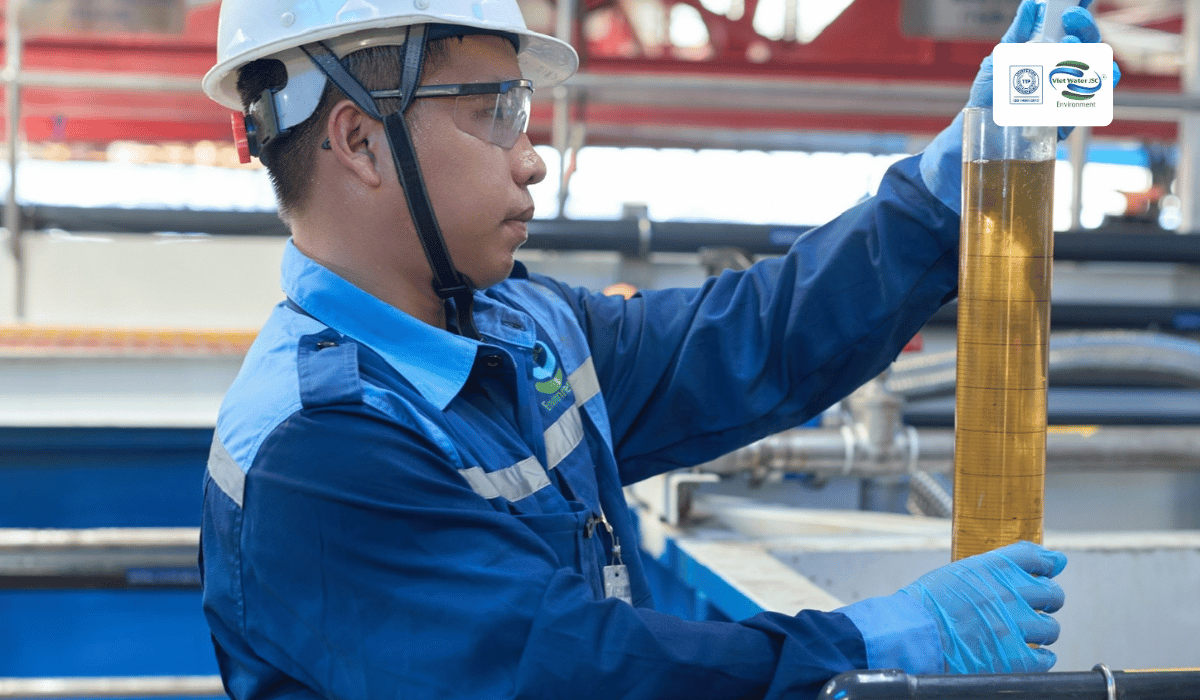
A complete construction project must include:
Operator training on system operation and safety
Standard operating procedures (SOPs)
Maintenance and cleaning schedules
Emergency response guidelines
Well-trained operators are essential for maintaining system performance and protecting equipment investment.
Based on real projects, common issues include:
Inadequate pre-treatment leading to membrane fouling
Poor piping layout causing pressure losses
Insufficient automation and monitoring
Lack of maintenance access during installation
These risks can be minimized by experienced engineering, strict quality control, and adherence to design specifications.
A properly constructed wastewater reuse system provides:
Reliable and consistent water quality
Reduced freshwater consumption by up to 40–60%
Lower discharge volumes and environmental impact
Stable long-term operation with predictable costs
Faster return on investment and improved ESG performance
With extensive experience in industrial water treatment and reuse projects, Việt Water JSC delivers:
Turnkey wastewater reuse system construction
Integration of UF, RO, and advanced disinfection technologies
PLC/SCADA-based automation and monitoring
Commissioning, training, and long-term technical support
Explore our solutions in detail:
👉 WASTEWATER REUSE SYSTEM
The construction of a wastewater reuse system is not merely an installation task—it is a critical phase that determines system reliability, operating cost, and long-term sustainability. By combining sound engineering, proper construction practices, and advanced automation, enterprises can transform treated wastewater into a valuable and dependable water resource.
With proven experience and a practical approach, Việt Water JSC supports industries in building wastewater reuse systems that are efficient, compliant, and future-ready.
Upgrading wastewater reuse systems is not only a technical improvement but a long-term economic and...
Maintenance and servicing of wastewater reuse systems are not optional—they are essential for ensuri...
This article presents a practical guide to operating wastewater reuse systems, based on real operati...